
Infinite Earths, Untold Tales: Deconstructing DC's Elseworlds Imprints and Their Unseen Influence on Canon
September 22, 2026 — ny_wk
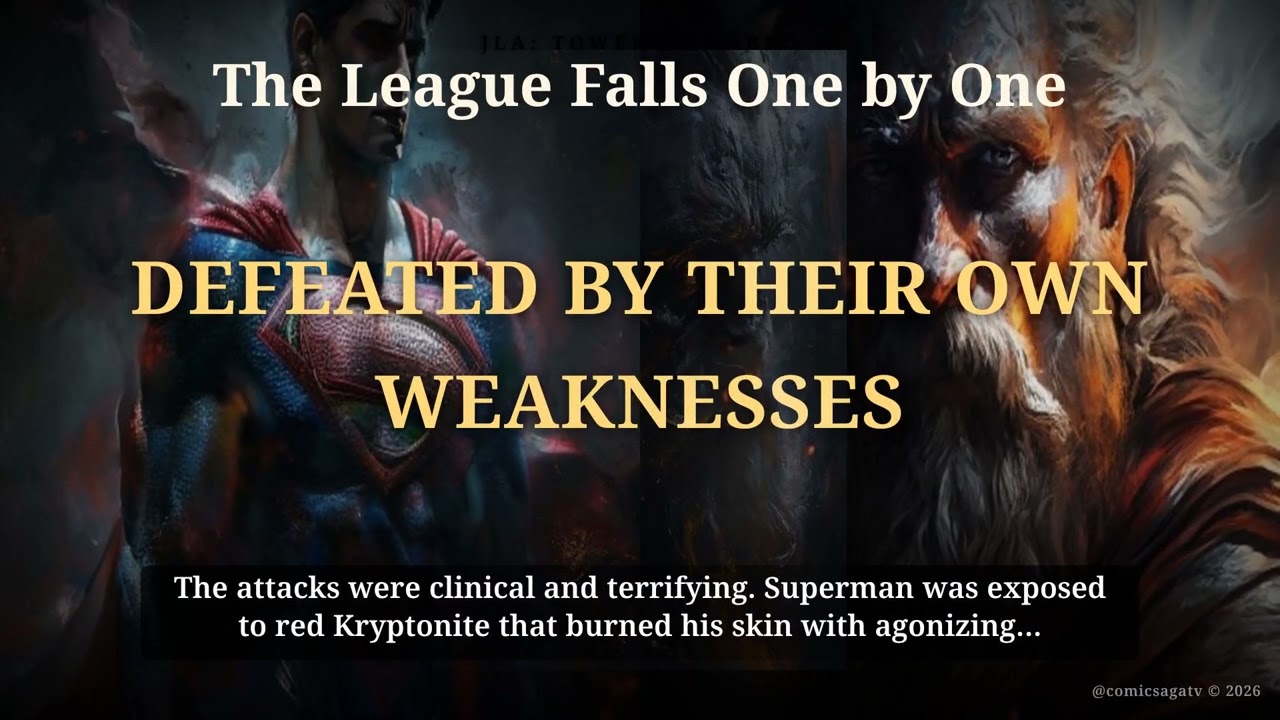
▶ Infinite Earths, Untold Tales: Deconstructing DC's Elseworlds Imprints and Their Unseen Influence on Canon | Subscribe to @comicsagatv
🛒 Recommended gear on Amazon
DC Comics' Elseworlds imprint wasn't just a side project; it was a revolution, freeing creators to tell stories unbound by continuity, laying the groundwork for the expansive Multiverse we know today. These legendary "what if" tales weren't just fun diversions; they profoundly shaped how we understand DC’s heroes and their potential, with many concepts seeping into the main DC Elseworlds explained canon in surprising ways.
***
Remember those days before infinite Earths and parallel dimensions became standard operating procedure for every comic book publisher? Back when the very idea of a Superman who landed in Soviet Russia, or a Batman chasing Jack the Ripper in Victorian Gotham, felt like pure, audacious fantasy? That, my friends, was the magic of **DC Elseworlds explained**. For those of us who grew up with these comics, they weren't just alternate takes; they were *permission* to dream bigger, to imagine beyond the confines of established canon, and to witness our beloved heroes in ways we never thought possible.
I've been knee-deep in comic books for decades, and few imprints sparked my imagination quite like Elseworlds. It was DC's glorious playground, a sandbox where the rules of continuity were joyfully thrown out the window. This wasn't just about fun "what if" scenarios, though there were plenty of those. Elseworlds was a vital, often unsung, force that didn't just give us incredible standalone stories but, crucially, shaped the very fabric of the DC Multiverse and even influenced the mainstream continuity in ways many readers might not fully realize. From its early days to its enduring legacy in today's sprawling comic landscape, let's pull back the curtain on this iconic imprint.
Disclosure: some links above are affiliate links — if you buy through them I may earn a small commission at no extra cost to you. Thanks for supporting the channel!
🛒 Today's Picks on Amazon
As an Amazon Associate I earn from qualifying purchases.
The Genesis of Infinite Possibilities: Where Elseworlds Began
Before we dive into the deep end, let's set the scene. The late 1980s and early 1990s were a wild time in comics. *Crisis on Infinite Earths* had "streamlined" the DC universe, collapsing countless Earths into one. While this simplified things for a while, it also created a hunger for the very alternate realities it had sought to eliminate. Creators, and readers, missed the freedom of exploring different versions of characters. Enter Elseworlds. The term itself didn't become an official imprint until 1991, but its spirit was alive and kicking a few years prior. The real kickoff, the story that set the template and showed DC (and the world) what was possible, came in 1989 with **Gotham by Gaslight**. Written by Brian Augustyn and drawn by Mike Mignola (yes, *that* Mike Mignola, before he went full *Hellboy*), this one-shot was something entirely new. It placed Batman in a steampunk-esque Victorian era, hunting Jack the Ripper. What made *Gotham by Gaslight* so groundbreaking? Two things: 1. **The "Prestige Format":** It wasn't a standard monthly issue. It was a square-bound, higher-quality, often longer one-shot, allowing for more expansive storytelling and better art reproduction. This format screamed "important" and "special." 2. **Total Freedom:** It wasn't "Batman #473" with a weird dream sequence. It was a self-contained story that openly defied mainstream continuity. It basically said, "This is Batman, but not *our* Batman. And that's okay." This was a revelation. *Gotham by Gaslight* was a massive success, both critically and commercially. It proved there was a hungry audience for these types of stories, stories that didn't mess with established canon but enriched the mythology by showing its incredible versatility. The official Elseworlds banner was born two years later, effectively giving creators a blank slate to tell any kind of story they wanted, so long as it featured DC characters and was explicitly *not* part of the main continuity. Imagine the pitch meetings! "So, Superman lands in Soviet Ukraine?" "Sure, why not!" "Batman is a vampire?" "Absolutely!" This era of creative liberation was exhilarating for creators and readers alike. It allowed writers and artists to deconstruct iconic heroes, test out radical ideas, and explore societal themes without the baggage of having to fit everything back into the main timeline. It was a safety valve, a pressure release that ironically gave DC's core universe more breathing room by siphoning off the wildest ideas into their own separate, beautiful realities.
Iconic Tales That Shook Our Worlds: The Best of Elseworlds
Over the years, the Elseworlds banner gave us some of the most memorable and beloved stories in DC's history. These weren't just novelty acts; many were genuinely profound explorations of character, morality, and the enduring power of myth. Let's look at some of the standouts that every comic fan should know:Superman: Red Son (2003)
This is arguably the crown jewel of the Elseworlds imprint, and often the first title people mention when you say "Elseworlds." Written by Mark Millar with art by Dave Johnson, Kilian Plunkett, and Andrew Robinson, *Red Son* asks: what if Superman's rocket landed in Soviet Ukraine instead of Kansas? The result is a fascinating alternate history where Superman becomes the champion of the Soviet Union, a benevolent dictator who strives to create a global communist utopia. * **Why it's essential:** *Red Son* isn't just a political allegory; it's a deep character study. It shows us that even with the best intentions, absolute power can corrupt, and that one man's vision of utopia can be another's dystopia. We see alternate versions of Batman (a Che Guevara-esque anarchist), Wonder Woman (torn between duty and love), and Lex Luthor (the ultimate capitalist hero). It’s a profound examination of ideology, destiny, and the core traits that define Superman, regardless of his origin. It's smart, thrilling, and thought-provoking, and it quickly transcended its Elseworlds label to become a modern classic.Kingdom Come (1996)
Okay, so technically, *Kingdom Come* isn't an Elseworlds story in the purest sense (it was published under the "DC Comics" banner and later explicitly integrated into the Multiverse via Hypertime). But its spirit, its impact, and its approach to alternate futures align so perfectly with what Elseworlds aimed to do that it simply *has* to be included here. Written by Mark Waid and painted by the legendary Alex Ross, *Kingdom Come* is a stunning magnum opus about a future where the old guard of heroes has retired, replaced by a new, violent, morally ambiguous generation of metahumans. * **Why it's essential:** *Kingdom Come* isn't just beautiful to look at (Alex Ross's art is unparalleled); it's a scathing commentary on the "grim and gritty" era of comics that preceded it. It asks fundamental questions about heroism, responsibility, and legacy. What happens when heroes stop being symbols and start being brawlers? What is the role of the older generation when the new one forgets its ideals? It's epic in scope, tragic in its undertones, and ultimately hopeful. Its vision of an apocalyptic future, a return of the "old gods," and its examination of hero ethics resonated so deeply that DC found ways to integrate its reality (Earth-22) into the broader Multiverse framework.Batman: Holy Terror (1991)
Imagine a Gotham where the United States is a theocratic state ruled by a fanatical Christian government, and Bruce Wayne is a former seminarian who discovers his parents were murdered not by a random mugger, but by agents of this regime. This is *Holy Terror*, written and drawn by Alan Brennert and Norm Breyfogle. * **Why it's essential:** This story is a sharp, unsettling critique of fundamentalism and state control. It completely redefines Batman's origin, motivation, and methods in a chillingly plausible alternate reality. It's darker and more overtly political than many Elseworlds stories, showing how the core concept of Batman – a man fighting injustice – can be applied to vastly different, terrifying scenarios. It proves that the "what if" scenarios could be more than just fun; they could be deeply resonant social commentaries.JLA: The Nail (1998)
Written and drawn by Alan Davis, *JLA: The Nail* (and its sequel, *Another Nail*) posits a world where Superman never existed. What's the simple reason? A nail punctured the tire of the Kents' truck, preventing them from discovering the rocket that carried baby Kal-El. Without Superman, the Justice League forms, but they're fractured, less unified, and facing threats far more dangerous without the Man of Steel's inspiration and power. * **Why it's essential:** This story beautifully illustrates Superman's profound impact on the DC Universe. It’s not just about his powers; it's about his inherent goodness, his leadership, and his ability to inspire hope. Without him, the other heroes – Batman, Wonder Woman, Green Lantern, Flash – are different, often darker, struggling to fill the void. It underscores the idea that Superman isn't just *a* hero; he's *the* hero, the linchpin that holds the idealism of the DCU together.Batman & Dracula: Red Rain trilogy (1991-1998)
This wildly popular trilogy (Red Rain, Bloodstorm, Crimson Mist), written by Doug Moench and Kelley Jones, answered the ultimate gothic "what if": what if Batman became a vampire to fight Dracula? And then what if he became a villain himself? * **Why it's essential:** This series embraces the pulp, gothic horror roots of Batman while twisting them into something truly terrifying. Kelley Jones's art perfectly complements the dark, bloody narrative. It's a prime example of Elseworlds letting creators go wild, pushing characters to their absolute limits, and exploring the darker side of heroism when the cure becomes worse than the disease. It's violent, atmospheric, and utterly unforgettable. These are just a handful of the dozens of incredible stories born under the Elseworlds banner. Each offered a fresh perspective, a new angle on beloved characters, and proved that the essence of a hero could shine through, no matter the altered circumstances.Elseworlds' Invisible Hand on Canon: How "Non-Canonical" Became Influential
Here's where it gets really interesting for anyone who loves understanding the deeper currents of comic history. Elseworlds stories were, by definition, *non-canonical*. They didn't "count" towards the main DC continuity. And yet, their influence on the main timeline, on how DC approached its Multiverse, and even on the characterization of its flagship heroes, has been nothing short of profound. The idea that **DC Elseworlds explained** how to build out alternate realities long before the Multiverse was officially reformed is a key insight. Let's break down how these isolated tales managed to ripple through the entire DC universe:1. Character Deconstruction and Reconstruction
Elseworlds allowed creators to strip down heroes to their core concepts and rebuild them in radically different settings. This process often illuminated what *truly* defined a character. * For example, *Red Son* showed that Superman's innate desire to help, to create a better world, was always there, even if his methods under Soviet ideology were twisted. This deepened our understanding of the mainstream Superman's inherent morality. * Stories like *Gotham by Gaslight* showcased Batman's unwavering commitment to justice, his detective skills, and his capacity for darkness, regardless of the era or specific villain. This influenced how later mainstream writers tackled the character, often leaning into his detective side or exploring his psychological complexities. Frank Miller's *The Dark Knight Returns* (which, while not an Elseworlds, shares a similar spirit of alternate-future exploration) certainly paved the way, demonstrating the appetite for deconstructed, mature takes on iconic heroes. These alternate takes provided a sort of R&D lab for character development, allowing writers to explore facets of heroes that might be too radical for the main title, but which, once proven effective, could be subtly incorporated.2. Paving the Way for the Modern Multiverse
*Crisis on Infinite Earths* had condensed everything. Elseworlds, paradoxically, began the process of re-expanding the DC imagination. By consistently publishing popular stories set in alternate realities, DC was tacitly acknowledging that the "single Earth" approach wasn't enough. Readers *wanted* these other worlds. * **Hypertime:** In the late 1990s, DC introduced the concept of Hypertime, a theoretical framework where all possible timelines and alternate realities existed as branching possibilities. While a bit convoluted, Hypertime was clearly a meta-acknowledgment of the popularity and creative success of Elseworlds. It essentially said, "All those Elseworlds stories? They're real. They just exist in different, branching realities within a larger cosmic structure." This idea directly influenced later major events like *Infinite Crisis* and *Flashpoint*, which brought back the concept of multiple Earths with a vengeance. * **Proof of Concept:** Elseworlds proved that readers weren't confused by alternate realities; they embraced them. This was crucial for DC as it eventually moved towards a full re-establishment of the Multiverse post-*Infinite Crisis* (52 distinct Earths!) and later, *The New 52* and *Rebirth*'s more fluid Multiverse. Without Elseworlds conditioning readers (and creators) to the idea, these grand multiversal sagas might not have been as well-received.3. Inspiring Mainstream Storylines and Themes
Sometimes, the influence was more direct, with specific concepts or visual cues making their way into canon: * **Alternate Futures:** The idea of exploring "what if the heroes failed?" or "what does the future hold?" became a recurring theme in mainstream DC, often directly mirroring the somber, reflective tone perfected in Elseworlds titles like *Kingdom Come*. The "potential futures" explored in stories like *Future State* or even parts of *Dark Nights: Metal* owe a significant debt to the precedent set by Elseworlds. * **Creative Freedom for Mainstream Titles:** The success of Elseworlds helped normalize "out-of-the-box" thinking for mainstream books too. While not explicitly Elseworlds, stories that played with time, alternate realities (like *All-Star Superman* which, while canon to itself, had a very standalone, iconic feel), or genre-bending premises found a more receptive audience because Elseworlds had already broken down barriers. * **Characters and Concepts:** Though rare, occasionally elements would jump. For instance, the enduring popularity of certain Elseworlds versions (like Soviet Superman) has led to their appearance in other Multiverse-spanning events or media adaptations. *Gotham by Gaslight* received an animated movie adaptation and characters from it have appeared in other DC Multiverse projects, cementing its legacy beyond its initial printing. Even certain character designs or aesthetic choices from popular Elseworlds, like the armored looks in *Kingdom Come*, have inspired mainstream variations. It's a beautiful irony: the stories designed to be separate, to exist outside the strictures of canon, ultimately provided the very blueprint for how DC would expand its canon, embrace its multiverse, and reimagine its heroes for new generations. The sheer variety and quality of the Elseworlds imprint demonstrated a profound truth: the core appeal of DC's characters is so strong, so archetypal, that they can thrive in *any* setting, *any* timeline, and *any* interpretation.
Beyond the Imprint: Elseworlds' Legacy in the Modern Multiverse
The official Elseworlds imprint eventually faded out as a dedicated line in the mid-2000s, but its spirit is more alive than ever. In many ways, the entire DC Multiverse *is* the culmination of what Elseworlds started. Today, we have: * **DC Black Label:** This imprint, launched in 2018, is essentially the spiritual successor to Elseworlds for mature, standalone, out-of-continuity stories. Titles like *Batman: Damned*, *Superman: Year One*, and *Harley Quinn: Breaking Glass* offer the same creative freedom and prestige format that made Elseworlds so special, often aiming for older audiences with darker or more complex themes. It’s explicitly for stories that don't fit into the main continuity but retain the high-quality, impactful storytelling that defines the Elseworlds philosophy. * **The Re-established Multiverse:** With *Flashpoint* and *The New 52*, and then again with *DC Rebirth*, the Multiverse isn't just back; it's a central pillar of DC storytelling. The idea that there are 52 (or more!) Earths, each with their own unique history and heroes, is now firmly established. This allows for endless variations of familiar characters and settings, directly fulfilling the promise Elseworlds made years ago. We see Earth-2, Earth-3, Earth-X (now Earth-10), and many other distinct realities playing active roles in ongoing sagas. * **Dark Multiverse and Future State:** *Dark Nights: Metal* introduced the Dark Multiverse, a collection of unstable, nightmare realities formed from the fears of the main Multiverse. These are essentially Elseworlds on steroids, often showcasing incredibly dark, twisted versions of heroes and scenarios. And *Future State* offered a glimpse into potential (and often bleak) futures, giving creators a sandbox to play with new versions of characters and legacy heroes, much like *Kingdom Come* did decades prior. The very concept of a Multiverse where "everything happened, everything matters, and everything *could* happen" is the ultimate evolution of the Elseworlds philosophy. It proved that stories don't need to be strictly canonical to be meaningful, impactful, and even influential. It expanded the very definition of what a DC story could be.Why Elseworlds Still Matters (and Always Will)
So, why does any of this matter today, when we have the Black Label, an official Multiverse, and countless alternate universe tales across comics, TV, and film? Because Elseworlds was the brave pioneer. It broke the mold. It showed us that the true power of these characters wasn't in their rigid adherence to a single timeline, but in their archetypal resonance. Batman is Batman, whether he's fighting Jack the Ripper, leading a vampire army, or just being a regular guy. Superman is Superman, whether he lands in Kansas or the Soviet Union. Elseworlds gave creators permission to challenge assumptions, to be provocative, to explore new genres, and to simply tell great, self-contained stories without the pressure of continuity. It proved that sometimes, the most profound insights into who our heroes are come when you take them out of their comfort zone and plunk them down somewhere completely unfamiliar. It broadened our perspective, enriched the mythology, and ultimately, made the mainstream DC Universe a much more vibrant and imaginative place. For those of us who picked up these distinctive, square-bound comics, Elseworlds wasn't just a reading experience; it was an education in storytelling, an invitation to imagine, and a sign of the boundless creativity within the comic book medium. It taught us that the greatest stories often lie just beyond the established path.
Key Takeaways
* **DC Elseworlds explained a new publishing model**, offering standalone, out-of-continuity stories that explored "what if" scenarios with DC characters. * The imprint, largely beginning with *Gotham by Gaslight* (1989), leveraged the "Prestige Format" to deliver high-quality, impactful one-shots and limited series. * Iconic Elseworlds titles like *Superman: Red Son*, *Kingdom Come* (spiritually), *Batman: Holy Terror*, and *JLA: The Nail* pushed creative boundaries and offered profound character deconstructions. * Despite being non-canonical, Elseworlds profoundly influenced mainstream DC by proving the viability and appeal of alternate realities, shaping character interpretations, and laying the conceptual groundwork for the modern Multiverse (e.g., Hypertime). * Elseworlds' legacy continues today in imprints like DC Black Label and the officially re-established, expansive DC Multiverse, which embraces the creative freedom and diverse storytelling approaches pioneered by Elseworlds.Frequently Asked Questions
What exactly is DC Elseworlds?
DC Elseworlds was an imprint from DC Comics dedicated to publishing stories that took iconic DC characters and placed them in alternate realities, timelines, or historical periods, completely outside of the main DC continuity. These were "what if" tales that allowed creators immense freedom to reimagine heroes and villains without affecting the primary universe.Is Elseworlds part of the main DC continuity?
No, by definition, Elseworlds stories are *not* part of the main DC continuity. They are standalone tales set in alternate universes. However, their immense popularity and creative success led DC to eventually re-embrace the concept of a Multiverse, and some ideas or characters from Elseworlds have subtly influenced mainstream continuity or appeared in Multiverse-spanning events.What are some of the most famous DC Elseworlds stories?
Some of the most celebrated and impactful Elseworlds stories include *Superman: Red Son*, which imagines Superman landing in Soviet Russia; *Kingdom Come*, a future saga about generational shifts in heroism (often considered Elseworlds in spirit); *Batman: Gotham by Gaslight*, where Batman hunts Jack the Ripper in Victorian London; and *JLA: The Nail*, exploring a world without Superman.Did Elseworlds influence the DC Multiverse?
Absolutely! Elseworlds was instrumental in paving the way for the modern DC Multiverse. After *Crisis on Infinite Earths* streamlined DC into a single Earth, Elseworlds demonstrated a strong reader appetite for alternate realities. This proved to DC that a larger Multiverse was not only viable but desired, leading to the re-establishment of multiple Earths in events like *Infinite Crisis* and *Flashpoint*, and continuing through *DC Rebirth*. The imprint showed that characters could exist in endless variations and still resonate deeply. *** And there you have it, fellow comic fanatics! A deep dive into the boundless imagination that was, and still is, the spirit of DC Elseworlds. What are your favorite Elseworlds tales? Did I miss one that blew your mind? Let us know in the comments! For more behind-the-scenes looks at comic history, character deconstructions, and all things DC and Marvel, be sure to follow @comicsagatv on social media! We're always talking about the stuff you love.Related reading
- The Unseen Architects of She-Hulk's Legal Universe: Deconstructing Her Most Influential Court Cases and Their Comic Implications
- The Black Vortex's Unseen Influence: Deconstructing Its Cosmic Power, Celestial Origins, and Multiversal Destinies
- The Unseen Universes Within: Deconstructing Marvel's Microverse, Sub-Atomica, and Quantum Realm's True Science and Multiversal Significance
- The Unseen Mechanics of Magic and Technology: Deconstructing Saga's Core Cosmic Duality
- The Unseen Equations of Reed Richards: Deconstructing the True Science Behind Marvel's Most Impossible Inventions
- The Symbiote Hive-Mind: Deconstructing Klyntar Biology, Sentience, and Its Cosmic Evolution Beyond Knull's Influence
- The Psionic Parasites: Deconstructing the Dire Wraiths' True Origins, Their Shapeshifting Sorcery, and Their Lingering Threat to Marvel's Universe
- The Multiverse Shattered: A Definitive Guide to the Cataclysmic Events and Lasting Legacies of DC's Crisis on Infinite Earths